
The swing tank solved a problem we don’t have anymore... and now it’s quietly costing buildings more than anyone expected.
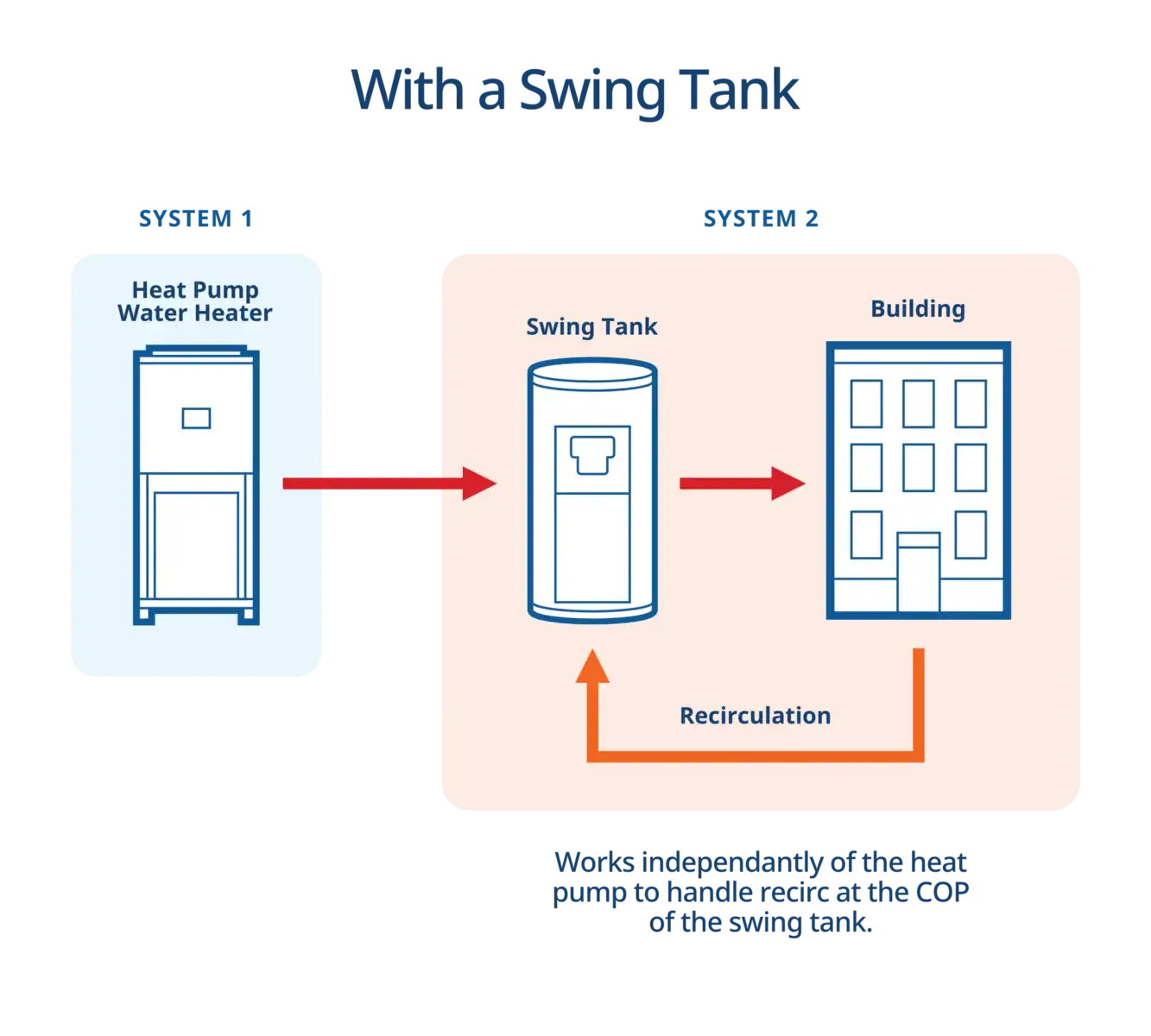
Swing tanks are used in some heat pump water heater systems to handle recirculation loads in single-pass designs. In many modern systems, especially those for variable load and recirculation, they aren't needed anymore.
Multi-pass and return-to-primary configurations allow the heat pump to handle the full load more efficiently. This often eliminates the need for auxiliary electric resistance heating, which can make systems both cheaper and more efficient.
This article explains why swing tanks became common, where they still make sense, and why many systems now perform better without them.
Now, here's a more "cinematic" look at the rise and fall of the swing tank:
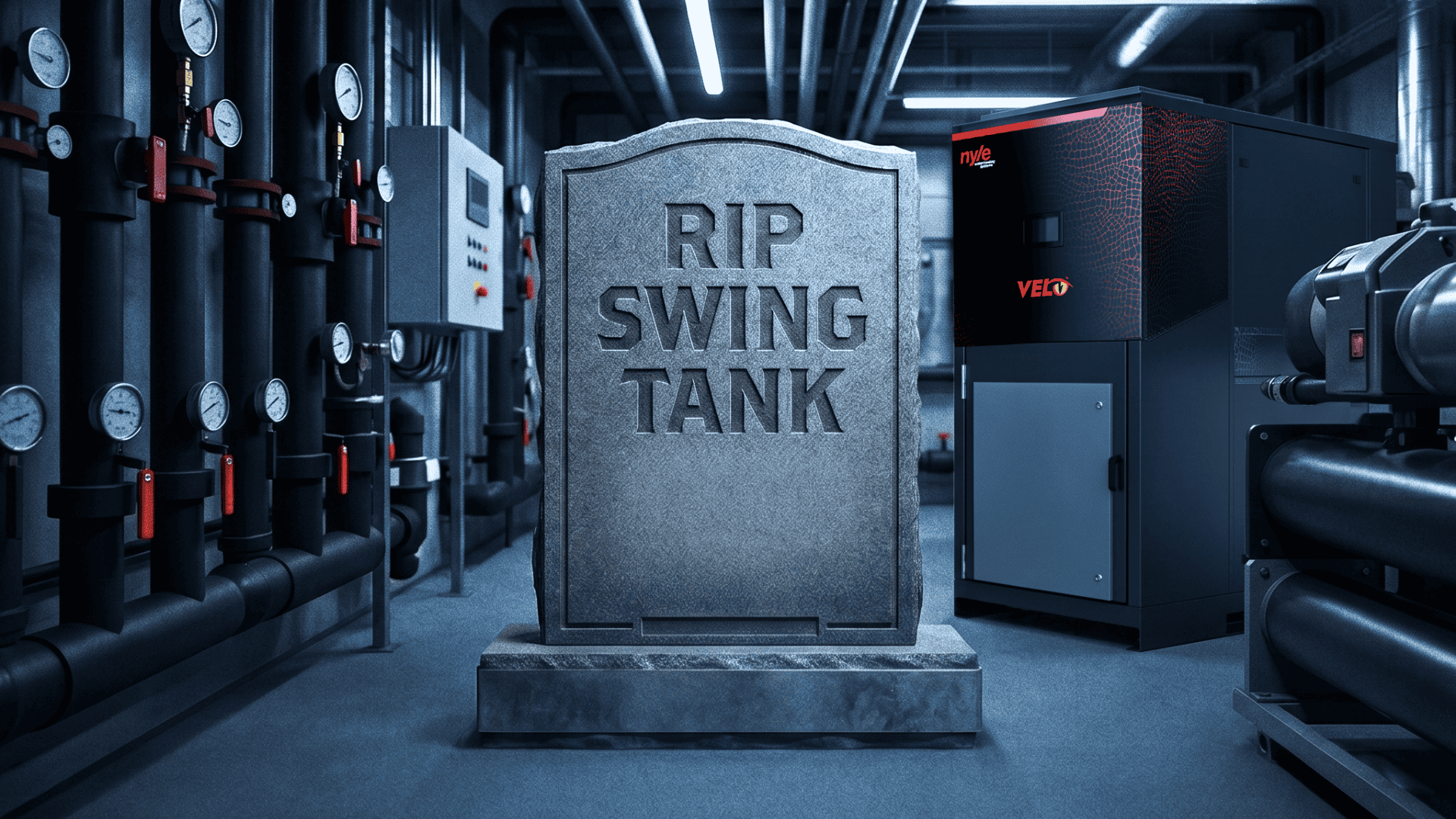
Death of a Swing Tank
There was a time when the swing tank strutted proudly upon the mechanical room stage — gleaming insulation, valiant in volume, ready to rescue an entering water temperature limited heat pump loop from thermal misfortune. It was the dependable understudy, always waiting in the wings to “smooth the load,” to “bridge the gap,” to absorb the chaos of single-pass ambition.
But the lights dim now on our swinging protagonist. The audience has changed. The plot has matured.
At first, we engineers were seduced by the swing tank’s promise — that extra buffer that made startup smooth and delta-Ts behave. Yet as data began to pour in from smarter, cleaner performers like Nyle’s Velo, the drama became clearer: the efficiency difference between multi-pass and single-pass systems simply isn’t the showstopper we once believed. The numbers reveal what the old script never questioned — when the ensemble is tuned correctly, the star of heat pump water heating doesn’t need an entourage of auxiliary electric tanks to hit its marks.
The tragedy of the swing tank is that its death was foretold not by failure, but by evolution. In a future powered by data instead of dogma, we see that the real opportunity lies not in buffering inefficiency, but in harnessing it — sweeping the recirculation losses into the efficient heat pump rather than giving them a second act with fossil fuel or resistance heat.
Where the swing tank once stood as a symbol of safety, now we celebrate streamlined systems that let the heat pump play every role: primary demand and recirc. No unnecessary soliloquies. No wasted BTUs waiting in the wings.
So as the final curtain falls, we bid farewell to a loyal but outdated character. The stage belongs now to integrated, intelligent design — leaner, data-led, and no longer afraid of a cold start.
A swing tank never dies in vain, of course. It teaches the next generation of systems what not to overcomplicate.
Why Do Swing Tanks Exist?
Arthur Miller aside, why do swing tanks exist? After all, multi-pass heat pumps that can handle recirculation losses have been around for over 20 years?
The promise of single-pass was that the high delta-T made the heat pumps more efficient and that a properly integrated swing tank for relatively continuous demand applications like multifamily would rarely run.
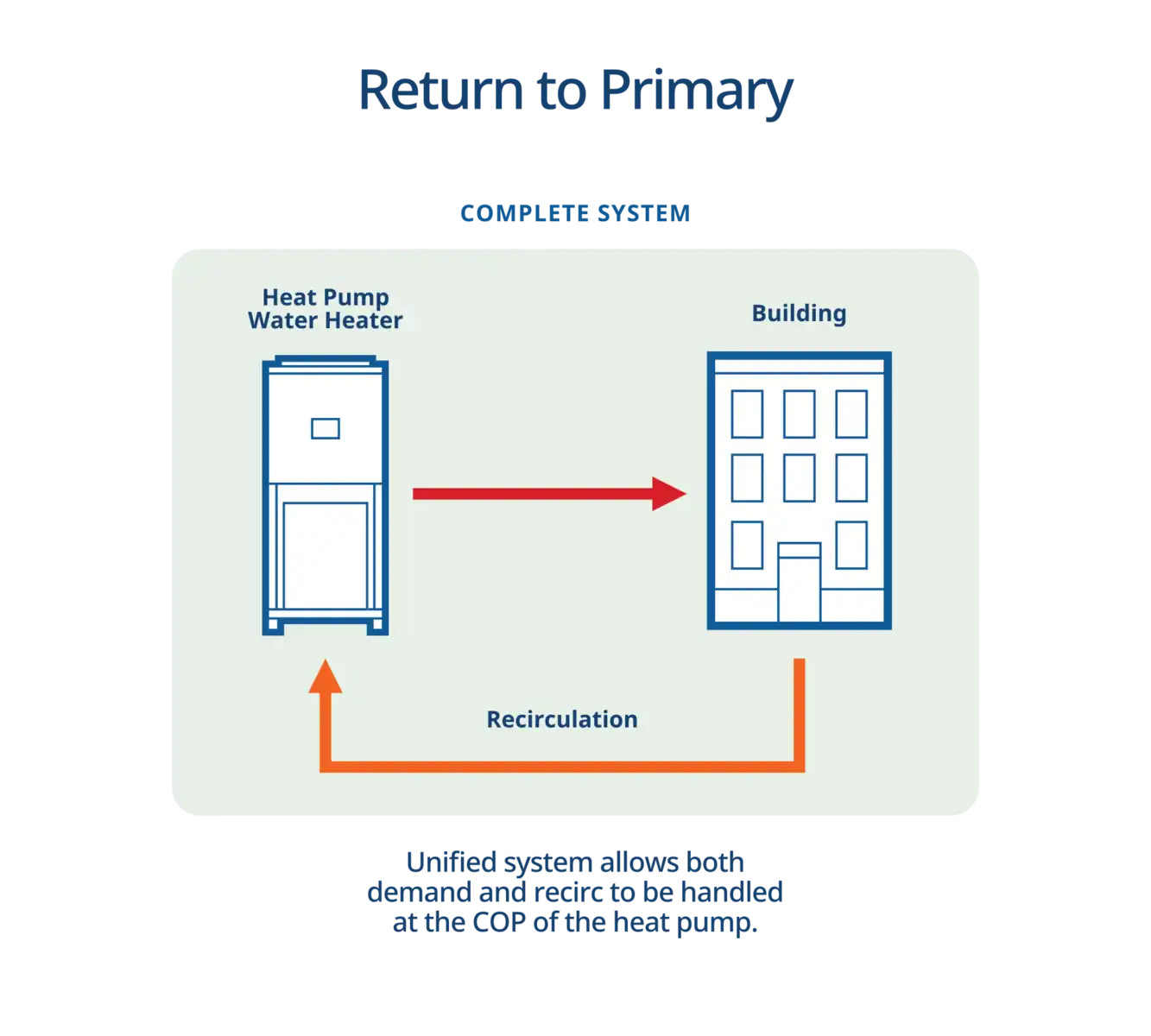
What We See in Real Buildings
Nyle has witnessed the real-world performance of swing tanks and has anecdotally heard the same sentiments from competing manufacturer installations. Recirculation losses are often greater than 50% of a building’s load. Offloading that narrow delta-T load to an auxiliary heat source does not make fiscal sense for the vast majority of domestic hot water applications in buildings. In addition, the hydronic realities of swing tanks often lead to over utilization of the electric resistive and under utilization of the heat pumps and unless the building was converted and has a benchmark for its utility bills, these systems often go undiagnosed.
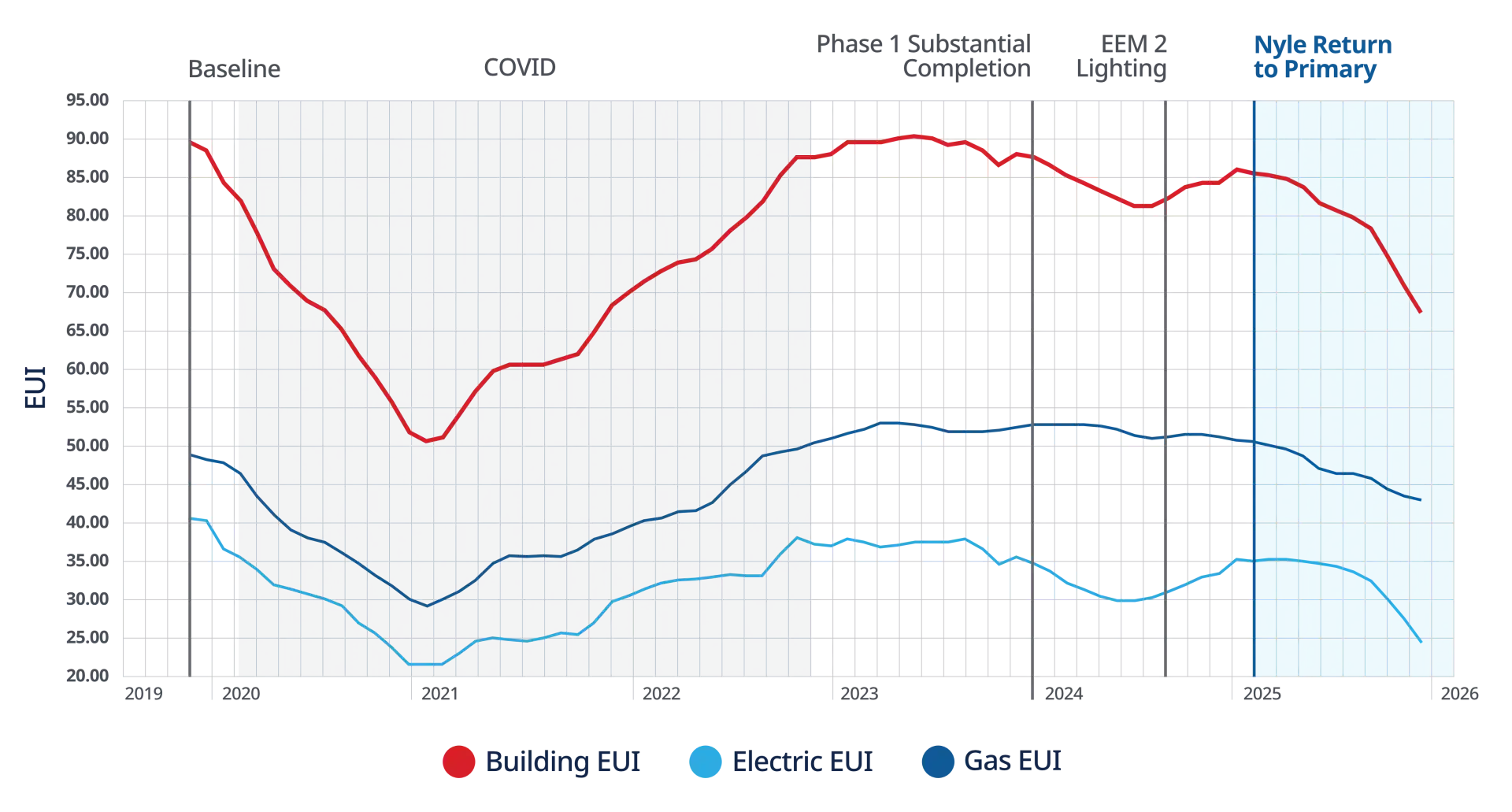
The chart above graphs real-world EUI data from a large convention center in Washington. After the recent commissioning of a Nyle system applying return-to-primary methodology, the data shows a significant improvement in energy savings. Courtesy of MacDonald-Miller Facility Solutions.
Single-Pass vs. Multi-Pass vs. Return-to-Primary
So why do swing tanks exist? Simple, it’s the only way Co2 heat pumps can be used to make domestic hot water at a somewhat reasonable price point. But what about the efficiency gain from the wide delta-T?
When a machine is developed from the ground up to satisfy both large and small delta-T’s, using variable speed compression, electronic expansion, ECM fans, variable flow rate control and a myriad of other heat pump technology advancements, the difference in efficiency between these two operating modes is less than 5%.
Compare that to continuously augmenting a heat pump's output with a technology that has a COP of less than 1, and the niche where swing tanks make any sense dwindles to a few, high continuous use, low recirc load projects.
Multi-Pass and Single-Pass Return to Primary are here to make the entire domestic hot water load efficient, not just the part that is convenient.